Your Companion for Design Storm Hydrology in a Changing Climate
Storm Injector is a powerful tool dedicated to applying Australian Rainfall & Runoff 2019 design storms and common PMP methods using a range of Australian and overseas hydrologic models including RORB, WBNM, XP-RAFTS, URBS and HEC-HMS. From temporal pattern ensembles all the way to advanced Monte Carlo modelling with AEP neutral, multi-variable sampling, Storm Injector turns design storm modelling into a breeze.

Storm Injector Clients
Storm Injector Key Features
Design Storm Modelling Made Easy
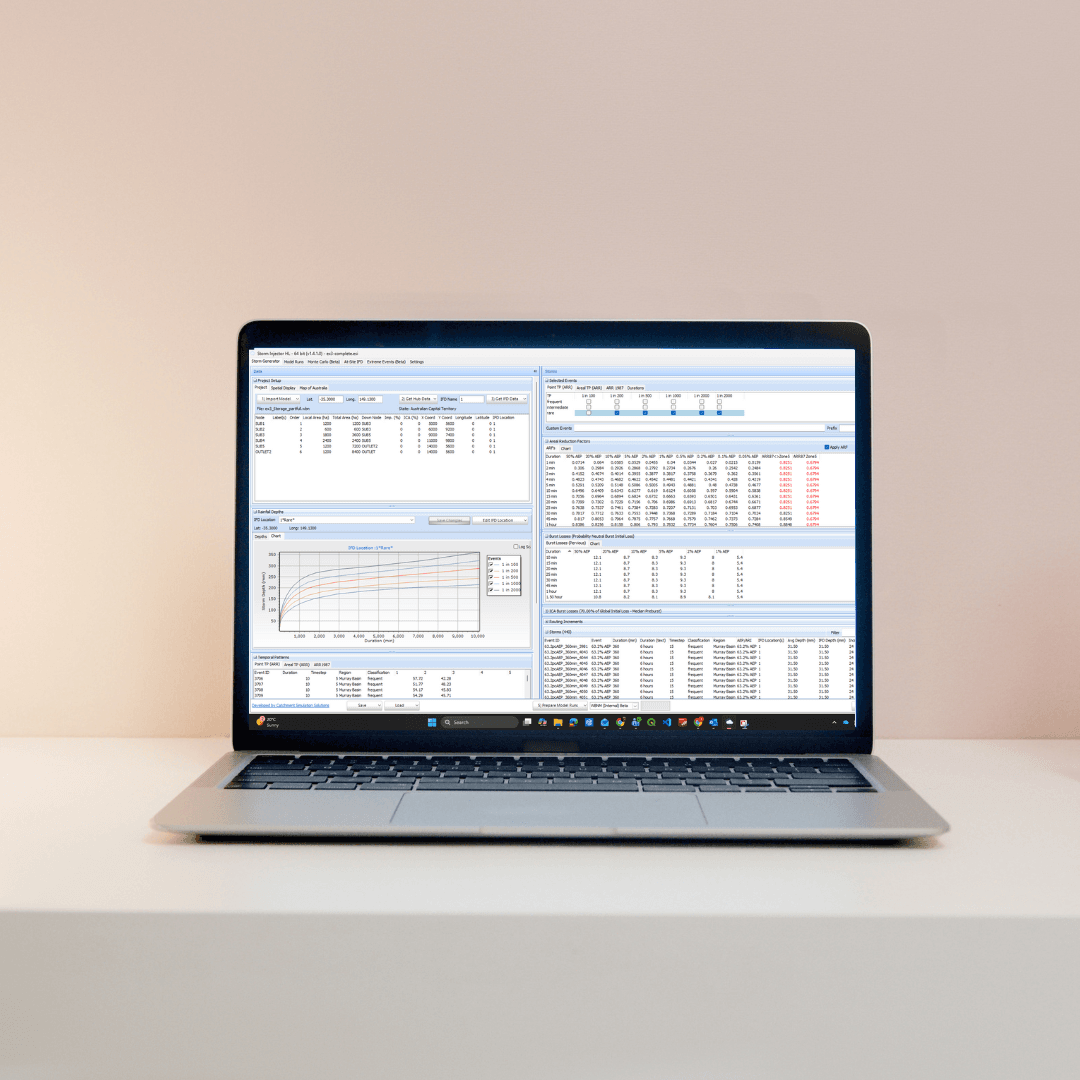
Storm Injector is a modern software tool crafted to automate the process of design storm modelling in Australia and New Zealand. It includes a simple workflow for importing climate and rainfall data from the web through to ensemble analysis, Mote Carlo analysis, at-site IFD verification, consideration of climate change and PMP / extreme event interpolation.
Monte Carlo Modelling
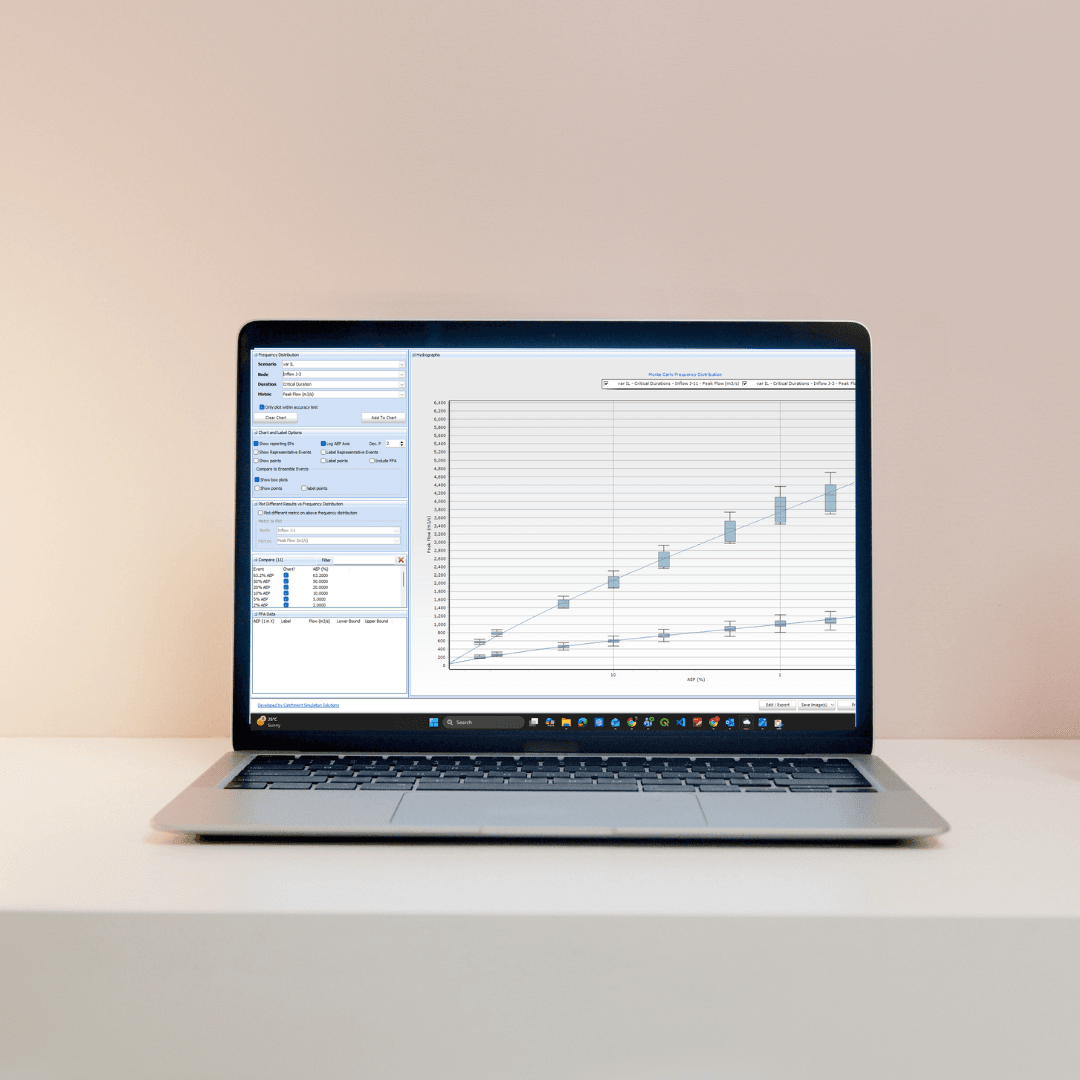
Monte Carlo is the gold standard in Australian design storm hydrology. Often feared due to perceptions of complexity, we’ve made it simple and even faster that the Ensemble approach. Get estimates for all AEPs in a single pass as well as information on what’s happening between AEPs.
You can also represent other unknowns in your design event modelling such as the starting level in storages.
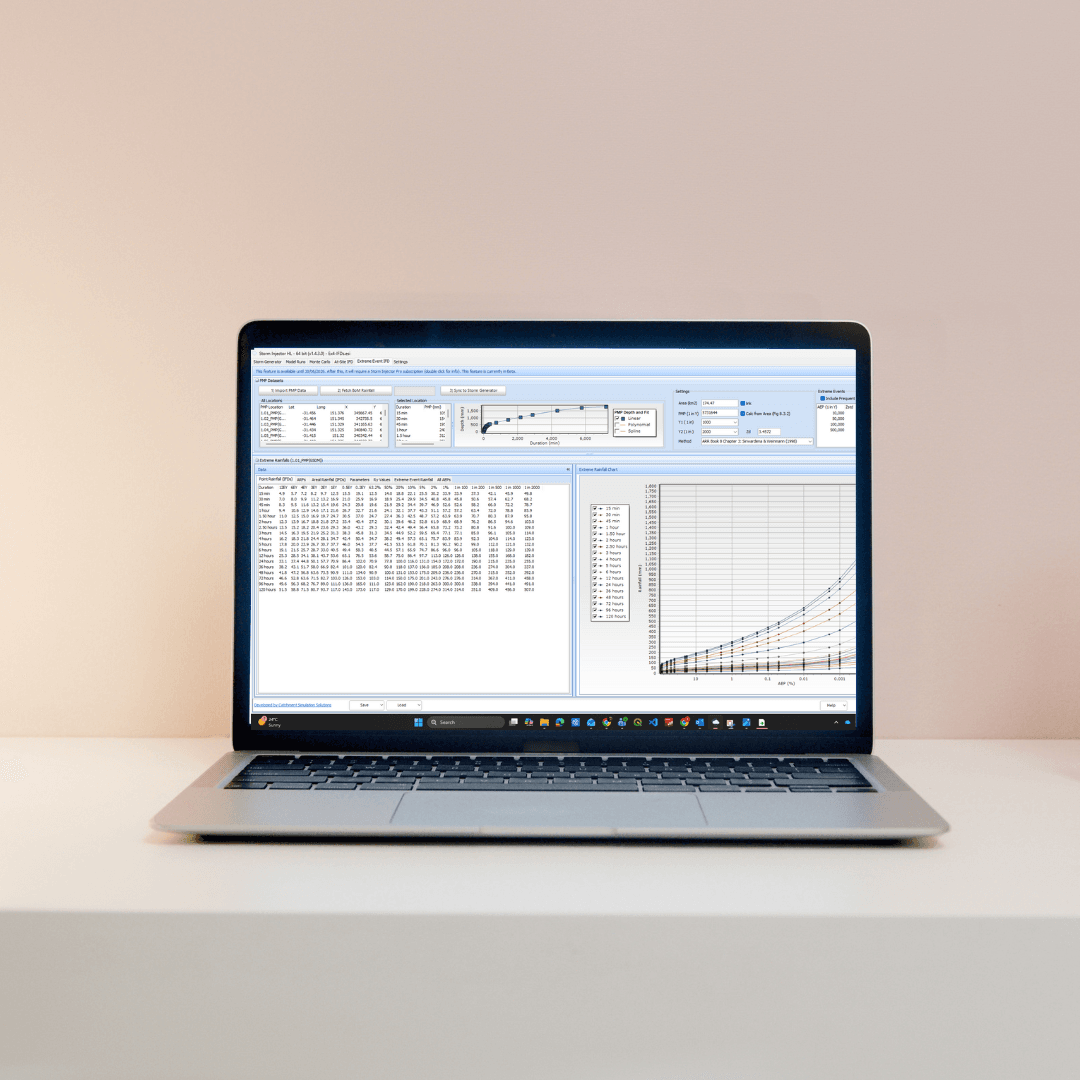
Extreme Event IFD and PMP / PMF
Storm Injector includes temporal patterns, pre-burst patterns and historical pattern ensembles for most PMP methods including GSAM, GTSMR and GSAM and makes them simple to use. Design rainfall depths for events between the 1in 2000 year and the PMP can also be interpolated easily in accordance with ARR guidelines.
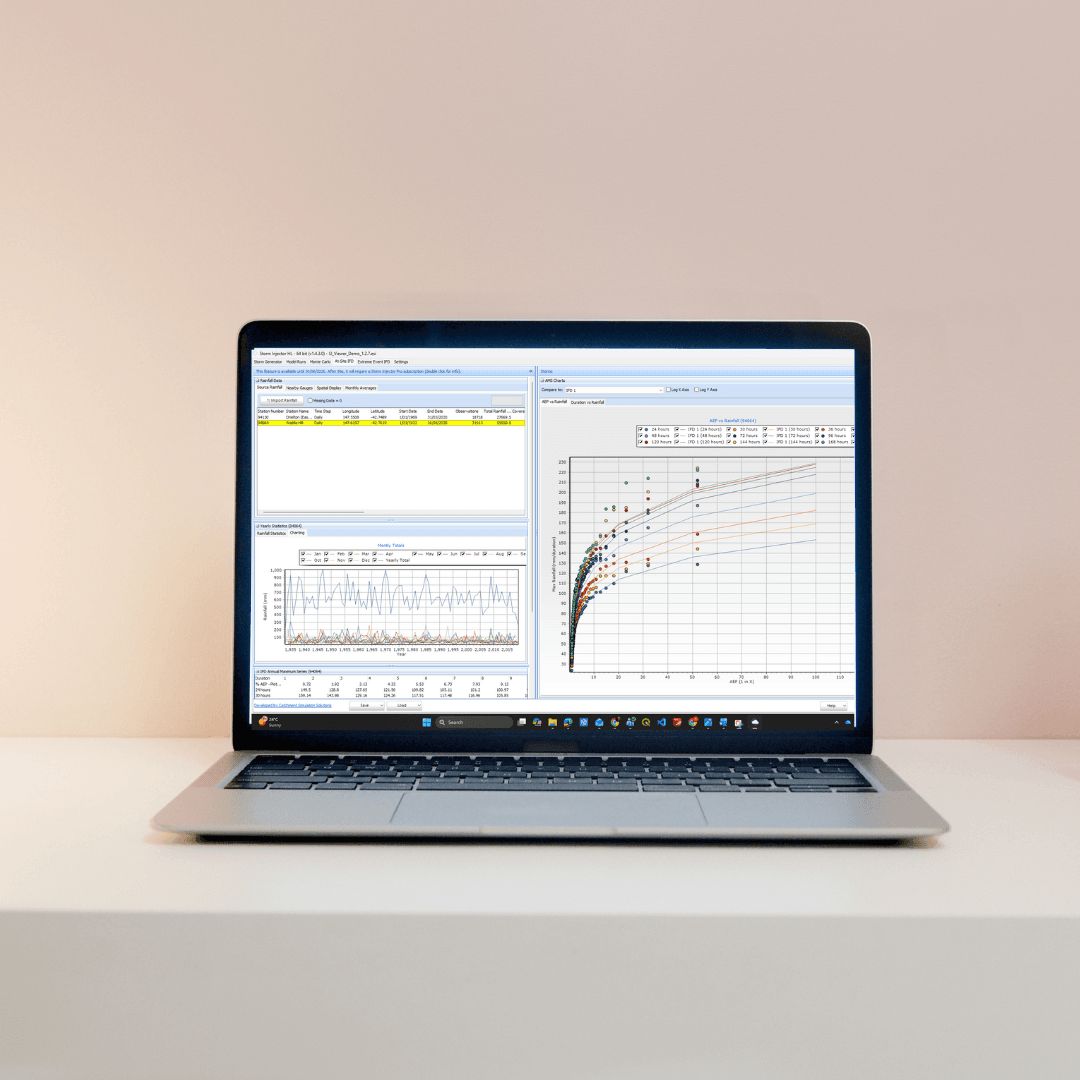
Verification with At-Site IFD Analysis
Australian Rainfall and Runoff (ARR) guidelines suggest that the IFD data from the BoM is verified against at-site rainfall records and Storm Injector provides the tools to do this. Import rainfall records and peak rainfall depths for each duration will be extracted and plotted against downloaded IFD dataset.
Design Storm Modelling Made Easy
Storm Injector is a modern software tool crafted to automate the process of design storm modelling in Australia and New Zealand. It includes a simple workflow for importing climate and rainfall data from the web through to ensemble analysis, Mote Carlo analysis, at-site IFD verification, consideration of climate change and PMP / extreme event interpolation.
ARR Ensemble Modelling
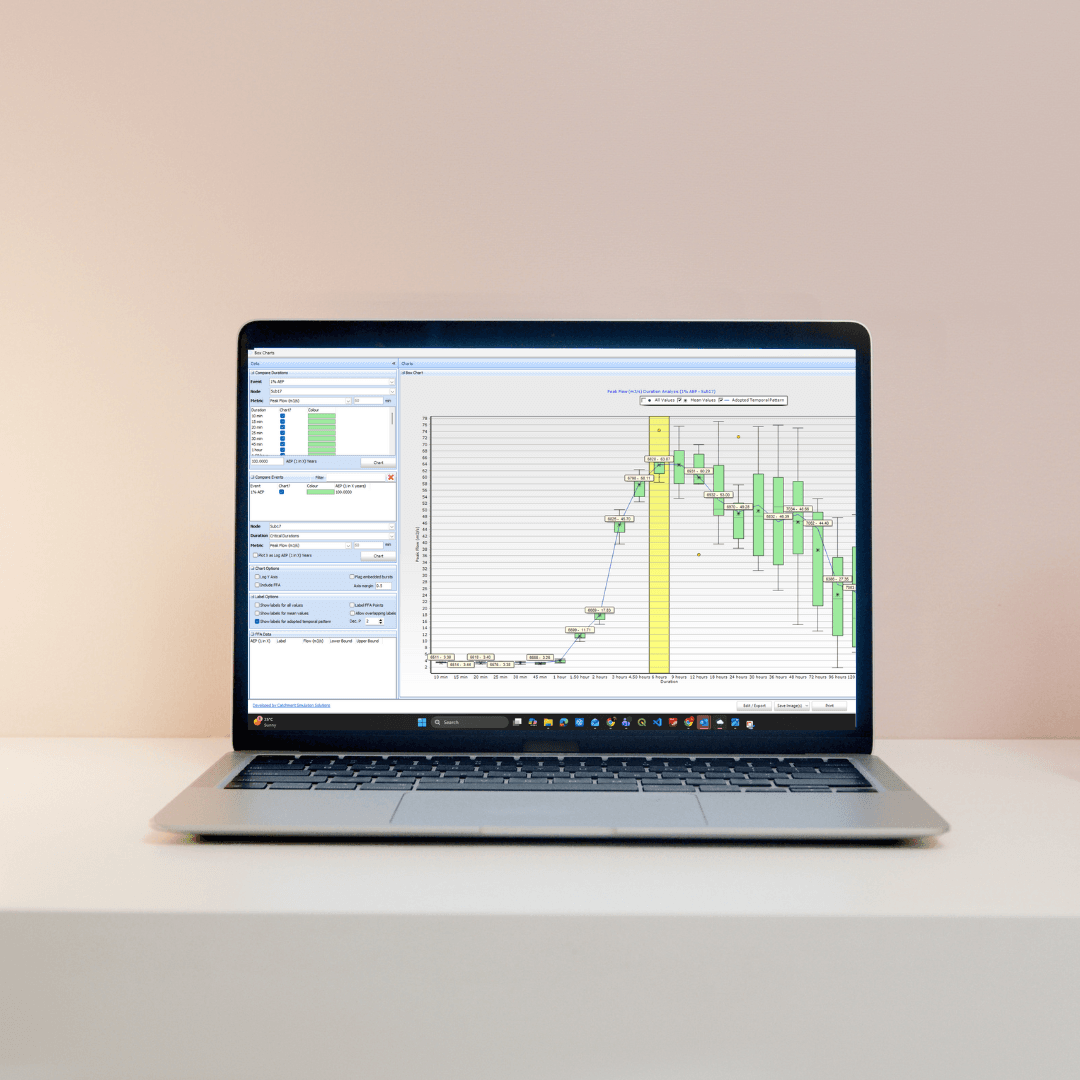
Ensembles are the bread and butter of Australian Rainfall and Runoff (ARR) design event hydrology and Storm Injector makes them dead easy. Critical duration analysis, ensembles of various parameters and comparing AEP estimates to FFA only takes a few clicks.
Monte Carlo Modelling
Monte Carlo is the gold standard in Australian design storm hydrology. Often feared due to perceptions of complexity, we’ve made it simple and even faster that the Ensemble approach. Get estimates for all AEPs in a single pass as well as information on what’s happening between AEPs.
You can also represent other unknowns in your design event modelling such as the starting level in storages.
Extreme Event IFD and PMP / PMF
Storm Injector includes temporal patterns, pre-burst patterns and historical pattern ensembles for most PMP methods including GSAM, GTSMR and GSAM and makes them simple to use. Design rainfall depths for events between the 1in 2000 year and the PMP can also be interpolated easily in accordance with ARR guidelines.
Verification with At-Site IFD Analysis
Australian Rainfall and Runoff (ARR) guidelines suggest that the IFD data from the BoM is verified against at-site rainfall records and Storm Injector provides the tools to do this. Import rainfall records and peak rainfall depths for each duration will be extracted and plotted against downloaded IFD dataset.
Why choose Storm Injector?
Modern, Simple & Focused
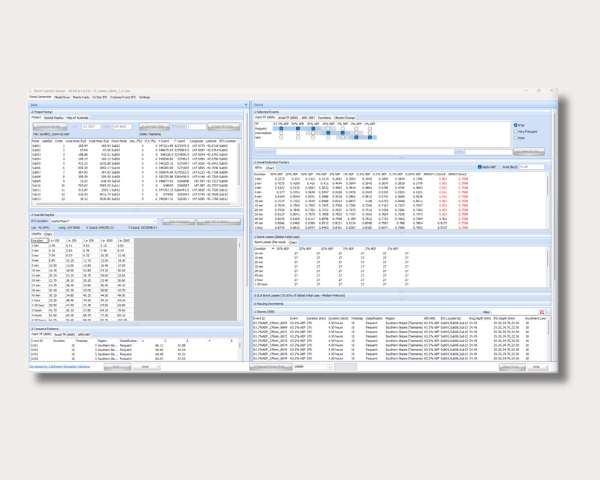
Most hydrologic models used in Australia are over 20 years old and not particularly user-friendly. Storm Injector allows you to take advantage of the time-tested hydrologic algorithms in these models in the background while using a modern software tool that is completely focused on design event hydrology.
Consistency & Transparency
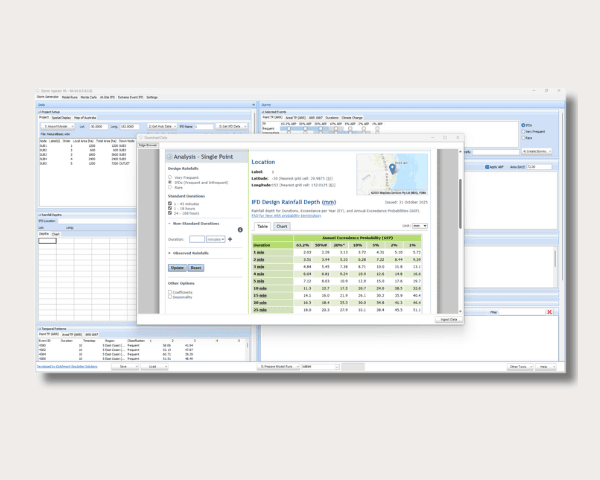
Different Australian hydrologic models employ different approaches to meet Australian Rainfall & Runoff requirements. Using Storm Injector in your organisation ensures the creation of design storm hyetographs and loss rates is completely consistent regardless of which hydrologic model is being used. Further, our free Viewer software ensures stakeholders or operators can open a project, analyse results at any point, now or in the future.
TUFLOW Integration
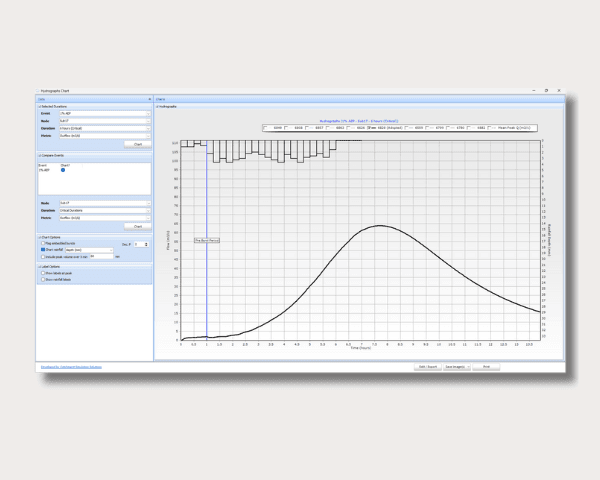
Storm Injector has efficient TUFLOW integration via an internal TS1 output engine. Storm Injector also has a range of tools to analyse results from various temporal patterns and minimise the number of TUFLOW simulations required including looking at focus location statistical analysis of the most commonly adopted temporal patterns.
Free Viewer Software
Storm Injector Viewer is free software that can load Storm Injector projects (*.esi), view and analyse results, prepare box and whisker charts and display hydrographs. It provides a powerful and flexible way for Storm Injector users to share and communicate results with their customers and stakeholders. Instead of simply providing some tables and charts in a report, stakeholders can inspect the results and charts for each event, duration and subcatchment at their own convenience.
Comparing Scenarios
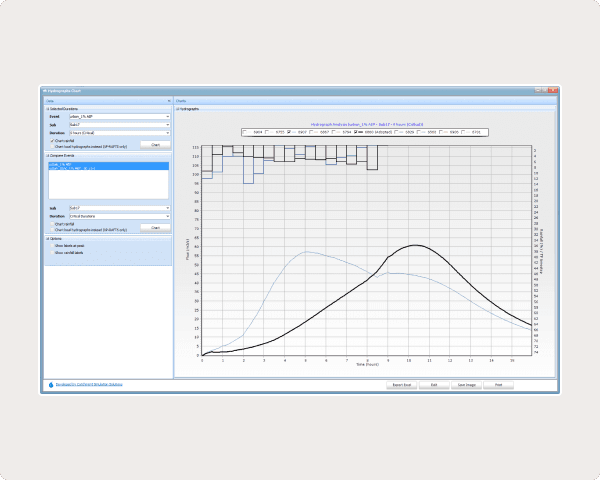
Too often, comparing hydrographs requires using additional tools like Excel. Storm Injector features including prefixes, Monte Carlo scenarios, and importing FFA results, allows powerful comparison charting right within the Storm Injector interface. Our documentation gives further examples for comparing scenarios.
Advanced Analysis
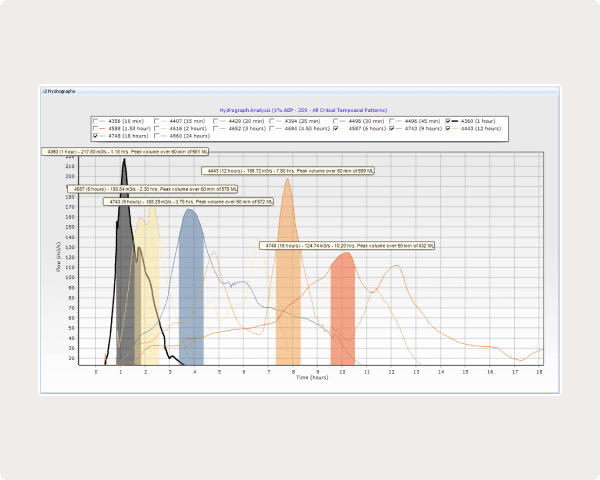
The ARR design storm methods in common hydrologic models are often targeted at the base requirement of ordering flow results from 10 temporal patterns per duration and calculating averages and representative temporal patterns. Storm Injector allows much more. For example, create ensembles from parameters such as peak volume in a given period or time exceeding a particular flow to answer questions related to evacuation routes.
Testimonials
What our customers are saying.
"We are using Storm Injector at Wagga Wagga City Council, especially for climate change analysis, and we are grateful for the software support provided for any potential questions regarding its use."

"Storm Injector Fundamentals online course exceeded my expectations. Chris was highly knowledgeable and used an online step-by-step guide to illustrate key concepts, making the material easy to apply and work back into my own projects."

Storm Injector is a subscription product with a license setup fee that applies when setting up a new subscription, or renewing a subscription that has expired for more than 30 days. It is available in a cloud license, single user USB dongle and network USB dongle formats.
A cloud license is perfect for smaller organisations and allows one or more subscriptions to be accessed from anywhere with the only limitation being the number of concurrent users.
A single user license is the most affordable option but requires the USB dongle to be locally inserted into any computer using the software and does not support remote access such as RDP.
Network USB dongles are designed for larger organisations with license servers and require a minimum of 2 subscriptions. They are the easiest option to deploy in larger organisations.
If a subscription expires or user without a subscription seeks to open a project, we have the free Storm Injector Viewer that can be used to open an existing Storm Injector project and visualise results and settings.
Yes, please contact us for discounted pricing when both software are purchased together.
Storm Injector fully meets the requirements of the new Climate Change Considerations chapter including duration dependent rates of change for rainfall and loss rates. Unlike other software, Storm Injector also allows the upper and lower bounds of SSP and rates of change to be modelled for sensitivity analysis. Please see our documentation for how to apply climate change considerations in standard events or custom events like the PMP.
Storm Injector can automatically download multiple IFD datasets throughout your catchment and spatially assign them to model subareas. Storm Injector includes algorithms to automatically determine the best locations for IFD download to most efficiently represent spatially varying IFD datasets and can download them in bulk. Furthermore, other IFDs such as frequent, rare and ARR87 can also be automatically downloaded.
Pre-burst modelling is a complex topic, particularly in regions such as south east Queensland. Pre-burst can be assigned over pre-burst temporal patterns (such as Jordan or GSAM), uniformly distributed or simply subtracted from initial loss. Please refer to our documentation for more information.
Yes, embedded bursts can be found and smoothed in Storm Injector. Please see our documentation as well as this conference paper for a detailed discussion regarding embedded bursts.
Storm Injector is fundamentally designed to meet the requirements of Australian Rainfall and Runoff and works predominantly with Australian rainfall runoff models. However, recently HEC-HMS support has been added as well as support for HIRDS rainfall data and temporal patterns allowing Storm Injector to be used in New Zealand and around the world.
Storm Injector has been verified against the ARR design storm algorithms available in WBNM, RAFTS and RORB and has been shown to give the same results. Our documentation includes a section outlining how Storm Injector has been verified against these models with steps allowing the verification to be reproduced by others.
Please contact us if you are having any problems verifying Storm Injector results.
Yes, via our integration with the Data Hub, Storm Injector will notify users if alternative IFD data sources are available and offer to download them in preference to the Bureau of Meterology IFDs. Jurisdictional advice regarding loss rates is also passed on to the user and can be easily adopted.